Product
What comes out?Raw biogas cleaned to a saleable fuel, plus the digestate stream. Both are products; a plant that treats the second one as waste has thrown away a revenue line.
Upgrading to CBG
20Cleaning and compressing raw biogas to the IS 16087 spec that makes it saleable — and the methane you lose doing it.
What is CBG?sourced
Compressed Biogas is raw biogas that has been cleaned of CO2, H2S and moisture to at least 90% methane, then compressed to about 250 bar so it can be used like CNG. Meeting the Indian standard IS 16087 is what makes it CBG rather than upgraded biogas.
What is the difference between biogas, biomethane and CBG?sourced
Biogas is the raw 50-70% methane gas from the digester. Biomethane is biogas upgraded to above about 90% methane. CBG is Indian-standard biomethane compressed to roughly 250 bar for sale. Bio-CNG is a common synonym for CBG.
Is CBG the same as CNG?sourced
Chemically they are nearly identical - both are mostly methane - so CBG runs in the same vehicles and the same networks as CNG. The difference is origin: CBG is renewable and made from waste, which is what earns it a blending mandate and a policy price.
What purity must CBG reach to be sold?sourced
It must meet IS 16087 - methane above 90% - plus limits on moisture, H2S, CO2 and inerts, so it performs like natural gas in the same equipment. Meeting the BIS specification is a legal precondition for commercial sale, not a quality preference.
Why is CBG compressed to 250 bar?sourced
Compression to about 200-250 bar packs enough energy into a cascade or cylinder to be transported and dispensed like CNG. Under SATAT the delivered price assumes CBG compressed to 250 bar and delivered in cascades to the retail outlet.
What exactly does IS 16087:2016 require?sourced
Minimum 90.0% methane by volume; CO2 no more than 4%; CO2 plus N2 plus O2 combined no more than 10%; oxygen no more than 0.5%; total sulphur including H2S no more than 20 mg per cubic metre; moisture no more than 5 mg per cubic metre; free of liquids and particulates; odorised per IS 15319.
What are the main upgrading technologies, and how do they compare?sourced
Water scrubbing is robust and impurity-tolerant but water-intensive; pressure swing adsorption is dry, compact and efficient but sensitive to inlet quality; membranes are compact and chemical-free and now dominate new Indian plants; amine scrubbing gives the highest purity but carries a thermal operating cost. Historically the global installed split ran roughly 35% water scrubbing, 30% PSA and 23% amine.
How does methane slip differ by upgrading technology?sourced
Reported slip: amine about 0.05%, membrane about 0.5%, water scrubber about 1.5%, PSA about 1.8-2%. Single-stage membranes can slip more unless multi-staged. Slip is lost revenue and a worse carbon profile at the same time, which is why it belongs in the contract.
What methane recovery and purity do these technologies achieve?sourced
PSA delivers roughly 96-98% recovery at 96-99% purity; amine can exceed 99.5% purity at near-zero slip; modern multi-stage membrane and VPSA systems recover 96-99%. Always check a vendor guarantee against your actual gas composition rather than a reference case.
How much energy does upgrading consume?sourced
Electricity for CO2 separation runs roughly 0.18-0.30 kWh per cubic metre of raw biogas for PSA, 0.25-0.35 for water scrubbing, 0.2-0.4 for membranes and up to 0.4-0.6 for cryogenic routes. This parasitic load is a real cost line, not a rounding error.
How is compression staged, and why is intercooling needed?sourced
Multi-stage reciprocating or screw compressors, typically four or five stages, raise pressure from about 1 bar to 200-250 bar, with intercooling after each stage to remove heat and condensed moisture. Compression alone consumes about 0.15-0.20 kWh per kg of CBG.
What does the Wobbe index have to do with grid injection?sourced
The Wobbe index measures how interchangeable two gases are in a burner. To inject into a CGD or transmission network the gas must match the network's Wobbe and dew-point specification as well as IS 16087 - PNGRB injection rules require hydrocarbon and water dew points no higher than 0 degrees C at pipeline pressure, and entry temperature no higher than 55 degrees C.
What are the O2 and N2 limits, and why do they matter?sourced
Oxygen and nitrogen limits exist because air ingress - during air-dosing desulphurisation, or through membrane operation - dilutes methane and creates both a safety and a pipeline-quality problem. IS 16087 caps oxygen at 0.5%, so air dosing has to be metered precisely rather than set and forgotten.
Pipeline injection or cascade delivery - how do the economics differ?sourced
Cascade delivery trucks compressed gas to a retail outlet and attracts a higher compression charge - 8 rupees per kg to a retail outlet against 2 rupees per kg for pipeline injection. On the ground most producers still prefer cascade and retail sales, because pipeline injection is not yet widely implemented.
What is biogenic CO2 recovery?sourced
Roughly half of raw biogas is carbon dioxide. Captured rather than vented, and then purified and liquefied, it becomes a saleable food-grade or industrial product that displaces fossil-derived CO2. About 0.5 tonnes of CO2 accompanies each tonne of CBG, and most of it is currently vented.
What is LBG (liquefied biogas)?derived
LBG is biomethane cooled to a liquid for higher energy density, useful for long-distance road and marine transport where pipelines do not reach. It is more capital- and energy-intensive than CBG and remains a niche route in India today.
Why does BIS compliance protect the whole revenue stack?sourced
Off-spec gas cannot be sold to an OMC or CGD, can void the offtake agreement, and undermines any carbon or green-fuel claim attached to it - so a single quality parameter sits upstream of CBG revenue, FOM credibility and carbon eligibility together. Under the IOCL agreement, quality faults trace back to whichever party's equipment caused them.
Why is methane recovery a contractual issue, not just a technical one?sourced
Slip erodes both saleable volume and carbon value, so financiers increasingly require guaranteed methane recovery and guaranteed specific power consumption, each with a defined test protocol and a penalty. Treat a 99% recovery claim as a clause to be tested, not a brochure number.
What is biomethanation with hydrogen, and is it relevant to India now?derived
Adding hydrogen to the biogenic CO2 stream can convert it to additional methane, a power-to-gas route that raises output from the same feedstock. It needs cheap renewable hydrogen and is early-stage, so it is a future option rather than a mainstream Indian CBG pathway today.
What CO2 purity grades and markets exist for recovered biogenic CO2?derived
Recovered CO2 sells at industrial or food and beverage grade after purification and liquefaction, with food grade commanding a premium and demanding tighter purification. Realising the revenue needs liquefaction capital and a buyer within economic reach, so it is scenario-dependent rather than automatic.
Digestate & co-products
16FOM, LFOM, PROM, biochar and biogenic CO2 — the half of the output that is not gas, and pays for a lot of the plant.
What is digestate?sourced
Digestate is the nutrient-rich material left after the microbes have taken the biogas out. Processed, it becomes organic fertiliser - solid Fermented Organic Manure (FOM) or Liquid FOM (LFOM) - and it returns carbon and nutrients to the soil the feedstock came from.
Is a CBG plant only about gas?sourced
No. Every tonne of biogas leaves digestate behind, and selling it as FOM or LFOM is essential to plant economics rather than a bonus. A plant modelled on gas revenue alone is usually modelled short.
What is FOM, and how is it different from raw digestate?sourced
Fermented Organic Manure is the solid, standardised fertiliser product made from digestate; raw digestate is the wet effluent leaving the digester. FOM has to meet Fertiliser Control Order specifications before it can legally be sold as manure.
What are FOM, LFOM and PROM?sourced
FOM is solid fermented organic manure, LFOM is the liquid fraction, and PROM is phosphate-rich organic manure made by blending FOM with rock phosphate. All three are recognised categories eligible for Market Development Assistance at 1,500 rupees per tonne.
How is digestate separated into solid and liquid fractions?derived
A screw press or decanter centrifuge splits digestate into a fibrous solid cake, which is dried and pelletised into FOM, and a nutrient-rich liquid that becomes LFOM. Separation is the step that turns a bulky effluent into two marketable products.
What FCO standard applies to CBG plant manure?sourced
India amended the Fertiliser (Control) Order in 2025 to add Organic Carbon Enhancer from CBG plants under a new Schedule VIII, notifying FOM and LFOM specifications on 27 March 2025. Labels must state application 15-20 days before sowing.
What NPK does FOM carry, and why is that a limitation?sourced
The FCO requires total N plus P2O5 plus K2O of at least 1.2% with a minimum 14% organic carbon, so FOM is a low-analysis, carbon-rich soil conditioner rather than a concentrated NPK fertiliser. Its value is soil health and carbon - which is a benefit farmers have to be taught to price.
What pathogen and heavy-metal limits must FOM meet?sourced
Under the FCO, FOM must show nil pathogens, pH between 6.5 and 8.4, conductivity no more than 4 dS/m, and heavy-metal caps including cadmium at 5, lead at 100, chromium at 300, nickel at 50 and mercury at 0.15 mg/kg. Feedstocks carrying pathogen or metal loads - some manures, sewage sludge - therefore need care at the input end.
Why does FOM often fail spec, and what fixes it?sourced
FOM frequently misses the nitrogen and potassium minimums, because digestion conserves carbon but not always nutrients, and fibrous material fails the 4 mm sieve test at 70% moisture. Enrichment with N and K - moving toward PROM - fixes the nutrient gap; proper drying and screening fix the physical one.
Why must digestate storage be covered?sourced
Uncovered digestate keeps emitting methane and odour, losing carbon value and creating a fugitive-emissions problem that undermines the plant's own climate claim. Covered storage captures the residual gas, which is both extra yield and carbon integrity.
How does application timing affect digestate value?derived
Applied at the right point in the crop cycle, FOM and LFOM nutrients are taken up rather than lost; applied badly they are wasted and can run off. Matching digestate output to the local cropping calendar is part of making it a real revenue line rather than a disposal cost.
What is the digestate-to-Napier fertigation loop?sourced
Liquid digestate can be drip-fertigated onto the Napier crop that feeds the plant, recycling nutrients and cutting synthetic-fertiliser and water cost. It is central to Napier-based plant economics - and it depends on having leased land and water close enough to make the loop physical rather than notional.
How much can digestate contribute to revenue?sourced
Market Development Assistance of 1,500 rupees per tonne for FOM, LFOM and PROM can make manure a standalone cash flow rather than a footnote, provided marketing and logistics are solved - 111.72 crore rupees had been released as MDA up to 28 February 2026. Industry sources treat a plant that cannot monetise digestate as financially fragile.
Why is farmer acceptance the binding constraint on digestate revenue?derived
A spec-compliant FOM earns nothing if farmers will not buy it, and acceptance rests on demonstrated agronomic benefit, consistent quality and a distribution channel. The MDA subsidy addresses price; it does not address the harder marketing and behaviour-change problem.
What are the FOM and biogenic-CO2 offtake channels?sourced
FOM, LFOM and PROM sell to farmers, cooperatives and fertiliser marketers with MDA support behind the price; biogenic CO2 sells to industrial or food-grade buyers where liquefaction capital and a nearby buyer both exist. Both are real channels and both are under-developed, so neither should be modelled as automatic.
Where does biochar from digestate fit, and why is it a separate stream?sourced
Pyrolysing digestate solids to biochar is a separate, later-phase pathway producing a durable soil-carbon product and a distinct carbon-removal credit. It must never be combined with the plant's methane-avoidance accounting: removal and avoidance are different asset classes, priced roughly 10-20 times apart, and summing them misstates the climate claim.
The blocks
Full catalogue, all figures ->6 of the pieces you can put on the canvas belong to this stage. Every figure behind them is the one the simulator runs on, and each card says what the block takes in and what it hands on.
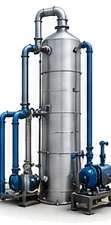
Pressurised water absorbs CO2, leaving CH4-rich gas at >95% purity.
TAKES RAW BIOGAS · MAKES RAW BIOGAS
- Outlet methane purity
- 96
- Methane recovered across the skid
- 97%
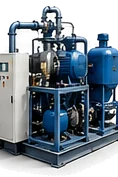
Compresses purified gas to 250 bar - the C in CBG.
TAKES RAW BIOGAS · MAKES CBG
- Compression efficiency
- 98
- Methane density at STP
- 0.717 kg/Nm³
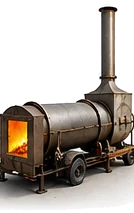
Slow-pyrolyses dried digestate solids into biochar at 450-600°C.
TAKES DIGESTATE · MAKES BIOCHAR
- Biochar yield, dry basis
- 30
- Carbon credit on the char
- -20 gCO₂e/MJ
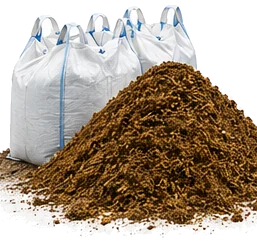
Fermented organic manure. Stabilised digestate sold as soil amendment.
TAKES DIGESTATE · SINK
- Digestate as a fraction of feed mass
- 22%
- Moisture in the digestate
- 30%
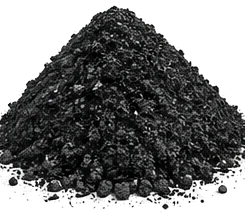
Stable carbon. Sold as soil amendment or carbon credit.
TAKES BIOCHAR · SINK
- Default sale price
- ₹21/kg
- Carbon credit on the char
- -20 gCO₂e/MJ
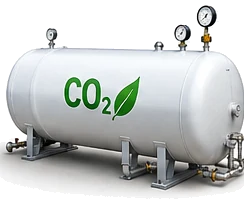
Polished CO2 sold to beverage, greenhouse, and food-processing markets.
TAKES RAW BIOGAS · MAKES CO₂
- CO₂ recovered to food grade
- 85%
- CO₂ density at STP
- 1.98 kg/Nm³
Sourcing sits beside these blocks as it is verified — vendors, capacities and indicative lead times, kept separate from the modelled figures and labelled whenever a link is paid. Supply this equipment?
Answers come from this site's reviewed question bank and cite the entry they came from. Press / to focus. Not investment advice.