Product
What comes out?Raw biogas cleaned to a saleable fuel, plus the digestate stream. Both are products; a plant that treats the second one as waste has thrown away a revenue line.
Upgrading to CBG
4Cleaning and compressing raw biogas to the IS 16087 spec that makes it saleable — and the methane you lose doing it.
Why does BIS compliance protect the whole revenue stack?sourced
Off-spec gas cannot be sold to an OMC or CGD, can void the offtake agreement, and undermines any carbon or green-fuel claim attached to it - so a single quality parameter sits upstream of CBG revenue, FOM credibility and carbon eligibility together. Under the IOCL agreement, quality faults trace back to whichever party's equipment caused them.
Why is methane recovery a contractual issue, not just a technical one?sourced
Slip erodes both saleable volume and carbon value, so financiers increasingly require guaranteed methane recovery and guaranteed specific power consumption, each with a defined test protocol and a penalty. Treat a 99% recovery claim as a clause to be tested, not a brochure number.
What is biomethanation with hydrogen, and is it relevant to India now?derived
Adding hydrogen to the biogenic CO2 stream can convert it to additional methane, a power-to-gas route that raises output from the same feedstock. It needs cheap renewable hydrogen and is early-stage, so it is a future option rather than a mainstream Indian CBG pathway today.
What CO2 purity grades and markets exist for recovered biogenic CO2?derived
Recovered CO2 sells at industrial or food and beverage grade after purification and liquefaction, with food grade commanding a premium and demanding tighter purification. Realising the revenue needs liquefaction capital and a buyer within economic reach, so it is scenario-dependent rather than automatic.
Digestate & co-products
4FOM, LFOM, PROM, biochar and biogenic CO2 — the half of the output that is not gas, and pays for a lot of the plant.
How much can digestate contribute to revenue?sourced
Market Development Assistance of 1,500 rupees per tonne for FOM, LFOM and PROM can make manure a standalone cash flow rather than a footnote, provided marketing and logistics are solved - 111.72 crore rupees had been released as MDA up to 28 February 2026. Industry sources treat a plant that cannot monetise digestate as financially fragile.
Why is farmer acceptance the binding constraint on digestate revenue?derived
A spec-compliant FOM earns nothing if farmers will not buy it, and acceptance rests on demonstrated agronomic benefit, consistent quality and a distribution channel. The MDA subsidy addresses price; it does not address the harder marketing and behaviour-change problem.
What are the FOM and biogenic-CO2 offtake channels?sourced
FOM, LFOM and PROM sell to farmers, cooperatives and fertiliser marketers with MDA support behind the price; biogenic CO2 sells to industrial or food-grade buyers where liquefaction capital and a nearby buyer both exist. Both are real channels and both are under-developed, so neither should be modelled as automatic.
Where does biochar from digestate fit, and why is it a separate stream?sourced
Pyrolysing digestate solids to biochar is a separate, later-phase pathway producing a durable soil-carbon product and a distinct carbon-removal credit. It must never be combined with the plant's methane-avoidance accounting: removal and avoidance are different asset classes, priced roughly 10-20 times apart, and summing them misstates the climate claim.
The blocks
Full catalogue, all figures ->6 of the pieces you can put on the canvas belong to this stage. Every figure behind them is the one the simulator runs on, and each card says what the block takes in and what it hands on.
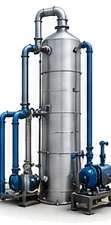
Pressurised water absorbs CO2, leaving CH4-rich gas at >95% purity.
TAKES RAW BIOGAS · MAKES RAW BIOGAS
- Outlet methane purity
- 96
- Methane recovered across the skid
- 97%
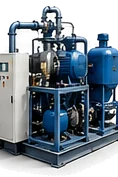
Compresses purified gas to 250 bar - the C in CBG.
TAKES RAW BIOGAS · MAKES CBG
- Compression efficiency
- 98
- Methane density at STP
- 0.717 kg/Nm³
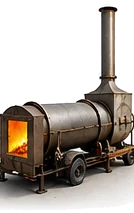
Slow-pyrolyses dried digestate solids into biochar at 450-600°C.
TAKES DIGESTATE · MAKES BIOCHAR
- Biochar yield, dry basis
- 30
- Carbon credit on the char
- -20 gCO₂e/MJ
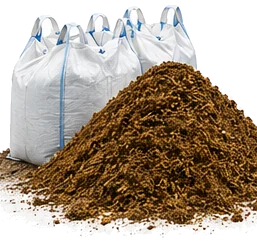
Fermented organic manure. Stabilised digestate sold as soil amendment.
TAKES DIGESTATE · SINK
- Digestate as a fraction of feed mass
- 22%
- Moisture in the digestate
- 30%
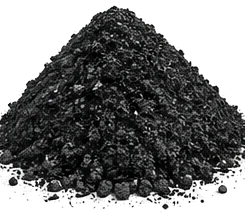
Stable carbon. Sold as soil amendment or carbon credit.
TAKES BIOCHAR · SINK
- Default sale price
- ₹21/kg
- Carbon credit on the char
- -20 gCO₂e/MJ
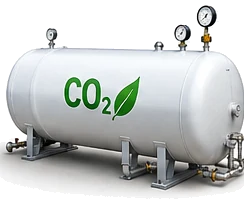
Polished CO2 sold to beverage, greenhouse, and food-processing markets.
TAKES RAW BIOGAS · MAKES CO₂
- CO₂ recovered to food grade
- 85%
- CO₂ density at STP
- 1.98 kg/Nm³
Sourcing sits beside these blocks as it is verified — vendors, capacities and indicative lead times, kept separate from the modelled figures and labelled whenever a link is paid. Supply this equipment?
Answers come from this site's reviewed question bank and cite the entry they came from. Press / to focus. Not investment advice.