Feedstock
What goes in?Everything upstream of the digester inlet. This is where plant economics are won or lost: yield per tonne is a lab number, and what reaches the gate every day is the real one.
Feedstock
3What you feed it, what that yields, and why securing supply — not choosing a digester — is where most plants fail.
How much does feedstock cost matter to project returns?sourced
Feedstock and its logistics are the largest recurring cost and the main swing factor in IRR, which is why lenders treat secured, contracted supply as the first test of bankability. Feedstock choice alone can move project IRR from around 7% to over 20%.
Captive or aggregated feedstock - which is safer?sourced
Captive supply - a sugar mill's own press mud, or dedicated Napier on leased land - de-risks supply but ties up land and capital. Aggregated agri-residue is cheaper at the gate but exposes the plant to collection risk. Reliance's Andhra model leases barren land for captive Napier precisely to close that exposure.
Why is feedstock the dominant driver of CBG project risk?sourced
Feedstock availability, price and quality determine utilisation, and utilisation drives IRR more than any single equipment choice. A plant with assured captive feedstock is far more bankable than one dependent on scattered aggregation, so investors should demand long-dated supply visibility and treat yield claims sceptically.
Pretreatment & handling
3Chopping, grinding, ensiling and storing: everything that happens between the field and the digester inlet.
How much of capex is feedstock pre-processing and handling?sourced
Pre-processing and handling is a major swing item and a common reason two nominally identical plants cost different amounts to build. Fibrous residues and segregated MSW need far more handling than press mud arriving by conveyor from the mill next door.
How should a developer weigh pretreatment intensity against payback?derived
Heavier pretreatment such as extrusion or thermal hydrolysis raises yield but adds capital and parasitic energy, so it only pays where the feedstock is fibrous enough that the incremental methane exceeds the added cost. The answer is feedstock-specific, which is why the simulator lets you test it rather than assume it.
The blocks
Full catalogue, all figures ->12 of the pieces you can put on the canvas belong to this stage. Every figure behind them is the one the simulator runs on, and each card says what the block takes in and what it hands on.
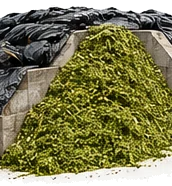
Napier silage
year-roundDedicated elephant grass silage. Balanced C:N and reliable BMP.
SOURCE · MAKES FEEDSTOCK
- Total solids
- 25%
- Volatile solids, of total solids
- 90%
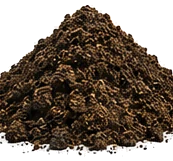
Sugar mill pressmud
seasonalFilter cake from sugar mill juice clarification. Dense, wet, cheap.
SOURCE · MAKES FEEDSTOCK
- Total solids
- 30%
- Volatile solids, of total solids
- 75%
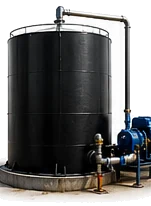
Molasses
year-roundSugar refining residual syrup. Very high BMP and digestibility.
SOURCE · MAKES FEEDSTOCK
- Total solids
- 80%
- Volatile solids, of total solids
- 85%
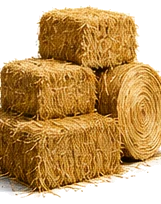
Paddy straw
seasonalRice harvest residue. Very high TS, wide C:N, slow to digest.
SOURCE · MAKES FEEDSTOCK
- Total solids
- 85%
- Volatile solids, of total solids
- 80%
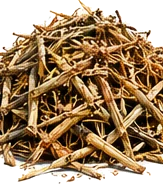
Cane trash
seasonalSugarcane leaves and tops left in the field after harvest.
SOURCE · MAKES FEEDSTOCK
- Total solids
- 70%
- Volatile solids, of total solids
- 85%
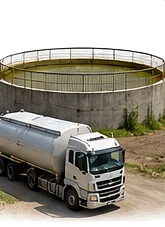
Cattle manure
year-roundDairy or beef cattle slurry. Low TS, low C:N, abundant near dairies.
SOURCE · MAKES FEEDSTOCK
- Total solids
- 12%
- Volatile solids, of total solids
- 80%
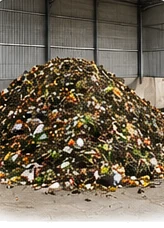
MSW organic fraction
year-roundWet biodegradable fraction of municipal solid waste. Tipping fee eligible.
SOURCE · MAKES FEEDSTOCK
- Total solids
- 30%
- Volatile solids, of total solids
- 75%
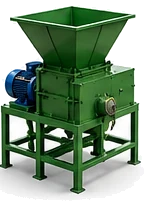
Chops green and soft wet material to a feedable particle size. Enough for napier, trash and segregated wet waste.
TAKES FEEDSTOCK · MAKES FEEDSTOCK
- Specific energy
- 4 kWh/t
- Handling cost
- ₹120/t
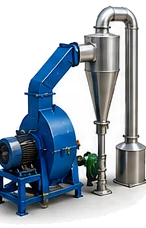
Impact milling for dry lignocellulosic straw. Baled paddy straw cannot be wetted out or pumped until it has been through one.
TAKES FEEDSTOCK · MAKES FEEDSTOCK
- Specific energy
- 25 kWh/t
- Handling cost
- ₹250/t
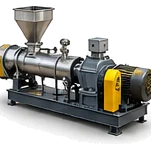
Mechanical pretreatment that shears lignocellulose open. Optional, energy hungry, and its yield uplift is not modelled here.
TAKES FEEDSTOCK · MAKES FEEDSTOCK
- Specific energy
- 45 kWh/t
- Handling cost
- ₹400/t
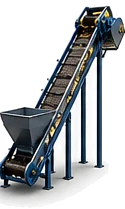
Belts, augers and a feed hopper. Bulk solids do not move themselves, and at plant scale this is a real line item.
TAKES FEEDSTOCK · MAKES FEEDSTOCK
- Specific energy
- 2 kWh/t
- Handling cost
- ₹40/t
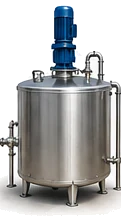
Blends feedstocks, balances C:N, regulates flow into the digester.
TAKES FEEDSTOCK · MAKES SLURRY
- Pre-heat temperature
- 30 °C
Sourcing sits beside these blocks as it is verified — vendors, capacities and indicative lead times, kept separate from the modelled figures and labelled whenever a link is paid. Supply this equipment?
Answers come from this site's reviewed question bank and cite the entry they came from. Press / to focus. Not investment advice.